How to Choose the Best Food Sealer Machine in China?
Choosing the right Food Sealer Machine in China starts with the product, not the brochure. A clear pouch of roasted nuts needs a different seal from a thick bag of frozen dumplings. Film type, bag thickness, moisture, and daily production volume all affect performance. Small details matter.
Quality-management expert W. Edwards Deming offered a useful reminder: “In God we trust; all others must bring data.” Apply that principle when comparing suppliers. Ask for a live sealing demonstration using your own packaging material. Inspect the seal edge, check whether it opens cleanly, and note how consistently the machine handles repeated cycles. Request measurable details, including sealing width, operating speed, temperature control, and recommended maintenance intervals. A polished sample is not enough.
The best machine is not automatically the fastest or least expensive. Match its capacity to realistic demand, and confirm which spare parts and technical support are available. If you are buying remotely, ask for clear videos, operating instructions, and a written specification sheet. Then compare the same criteria across suppliers. It takes time.
There is room for uncertainty. A demonstration cannot reproduce every shift, operator, or packaging batch. Even so, a careful trial can expose weak seals, awkward controls, or slow changeovers before purchase. This guide explains how to assess machine types, verify supplier claims, and choose a Food Sealer Machine that fits your actual production needs.
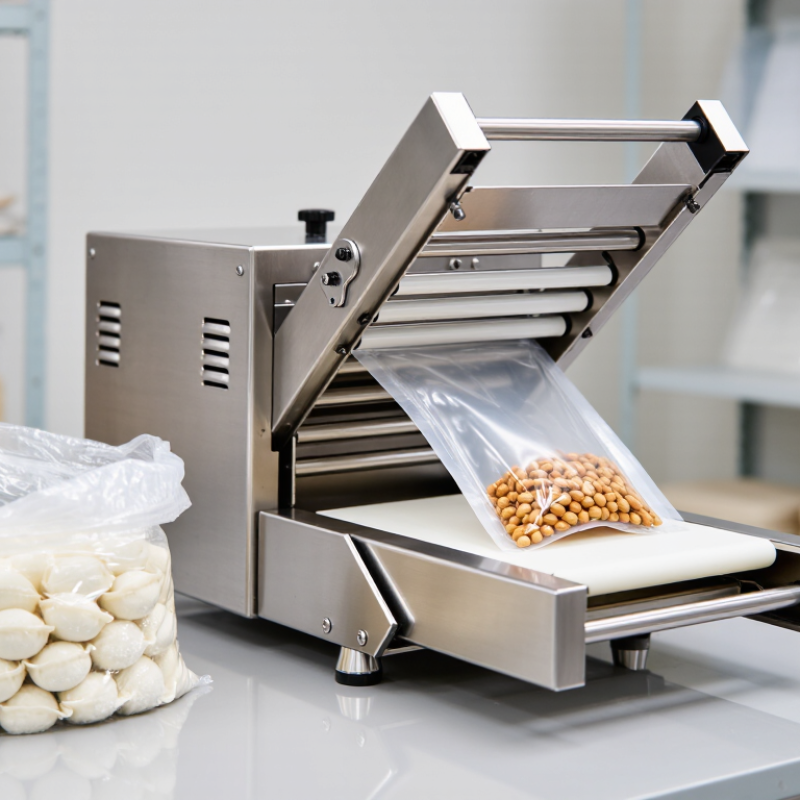
Define Product, Pack Format, and Required Throughput in Packs per Minute
How to Choose the Best Food Sealer Machine in China?
Choosing a food sealer machine starts with a precise product description, not a catalog photo. Specify whether you pack dry snacks, powders, sauces, or chilled portions. Note oil, crumbs, sharp edges, and filling temperature. These details affect seal cleanliness, film selection, and cleaning access. Small details matter. A trial using your actual product can reveal problems that an empty pouch will not.
Define the pack format before comparing machines. Record pouch material, width, length, thickness, and whether the package has a zipper or gusset. For trays or bags, include dimensions and how the product is loaded. Then set a realistic throughput target in good packs per minute. Include loading time, film changes, product variation, and brief stoppages; a machine’s stated maximum may not match your production floor. Ask for a timed test with your product and packaging, and confirm how the rate was measured.
Tips: Bring sample product and packaging to the evaluation. Watch several minutes of continuous operation, then inspect seals for wrinkles, trapped crumbs, or weak edges. Ask how changeovers and routine cleaning affect output. Leave room for a slower-than-expected result; real production is rarely perfectly steady.
Choose Between Chamber, External-Suction, and Continuous-Band Sealers
How to Choose the Best Food Sealer Machine in China?
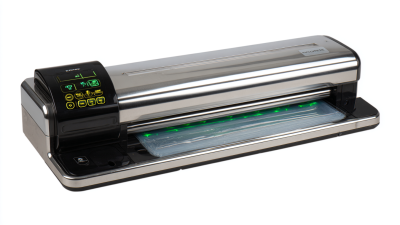
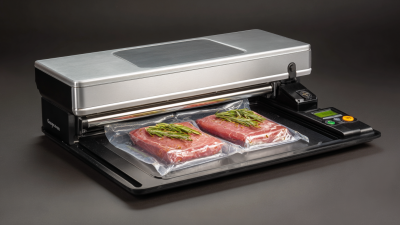
Chamber, external-suction, and continuous-band sealers solve different packaging problems. A chamber sealer suits wet foods, marinades, and frequent vacuum packing. The pouch sits inside the chamber, so liquid is less likely to be pulled into the pump. External-suction models work well for dry goods and smaller batches, but liquids can spill toward the suction nozzle. Continuous-band sealers close pouches quickly without removing air. They fit steady production lines where seal speed matters more than vacuum.
Grand View Research estimated the global vacuum packaging market at USD 29.88 billion in 2023, with a projected 4.7% compound annual growth rate from 2024 to 2030. This signals wider use of vacuum packaging, not a guaranteed return on any machine. In China, compare actual pouch width, product moisture, daily output, and available floor space before choosing. A chamber model may need more room; a band sealer needs consistent pouch feeding.
Ask suppliers for a live test using your own product and bags. Check seal strength, cycle time, and how easily operators clean the machine. Small details matter. A seal that looks neat may still leak after cooling. This is easy to overlook. Pilot testing is not exciting, but it can expose weak seals and slow loading before installation.
Compare Vacuum Targets (Often −0.08 MPa) and Seal-Cycle Capacity
A food sealer’s vacuum figure needs context. Many machines advertise a target near −0.08 MPa, measured against surrounding air. This is a gauge reading, not a promise that every bag will reach the same vacuum. Product shape, moisture, bag texture, and altitude can affect the result. A soft pouch holding warm, damp food may behave differently from a dry, flat sample. Test the machine with your own packaging.
Look beyond the headline number. Small bags vary. Check whether the machine holds its vacuum before sealing, and inspect the seal for wrinkles or trapped liquid. Seal-cycle capacity matters just as much. Ask how many consecutive cycles the unit can handle, and whether it needs cooling between batches. A listed cycle rate may not reflect steady production when an operator must load, position, and remove each bag.
Run a timed trial with realistic portions. Watch for slow recovery, uneven seal lines, or a hot sealing bar. One detail is easy to overlook: a machine that performs well for ten bags may struggle after an hour of repeated use. Record cycle time and seal quality during a longer test.
Validate Seal Strength with ASTM F88/F88M and Film Compatibility
When comparing food sealer machines in China, ask suppliers to test your actual film, not just a sample from their catalog. A laminate that seals cleanly on one machine may wrinkle or peel on another. Check the film’s sealing-layer material, thickness, and recommended temperature range. Then adjust temperature, dwell time, and pressure in small steps. Watch for channels, burnt edges, and uneven seal widths. Small details matter.
Use ASTM F88/F88M as a consistent method for measuring flexible-package seal strength. Cut specimens from several points across the seal and test them with a tensile tester. Record the force and how the seal fails, such as peeling apart or tearing through the film. Keep specimen width, conditioning, and test setup consistent; otherwise, results may be hard to compare. A strong number alone is not enough. This test measures seal strength, not package leak resistance or shelf life.
Ask for the test conditions and raw results, then repeat trials with your own production settings. Include seals made at the start and end of a run, when temperatures may differ. If results vary, check film alignment and seal-bar cleanliness before blaming the machine. Not always. A passing test also cannot replace checks for leaks, handling damage, or product-specific packaging needs. Keep the trial records, even when the first run looks good.
How to Choose the Best Food Sealer Machine in China?
Compare seal strength and confirm compatibility with the exact packaging film before selecting a machine.
The values shown are illustrative examples, not measured product data or ASTM acceptance limits. ASTM F88/F88M provides a method for measuring flexible-material seal strength; it does not set one universal pass value. Test the intended film on the sealer under consistent conditions, record force per specimen width and failure mode, and compare results with your packaging requirements.
Check GB 4806.7-2023 Compliance: Total Migration Limit of 10 mg/dm²
When choosing a food sealer machine in China, check the pouch material as carefully as the machine’s sealing temperature and pressure.
GB 4806.7-2023 sets a total migration limit of 10 mg/dm² for plastic materials and articles intended for food contact. The test method is specified in GB 31604.8-2021. Ask for the actual laboratory report, not only a supplier’s certificate. Check the tested material, food simulant, temperature, and contact time. These details matter because a result applies to the tested conditions, not every pouch or use.
Look for the measured migration value and compare it with the 10 mg/dm² limit. For example, a report showing 8 mg/dm² is below that limit under its stated test conditions, but it does not prove suitability for every food. A CNAS-accredited laboratory report can help verify the test’s source and scope. Also confirm that the pouch supplied with the machine matches the material and thickness tested.
Small details count. A strong seal cannot replace compliant food-contact packaging, and a polished certificate can still leave questions unanswered. I would double-check batch traceability before buying.