Leave Your Message
Choosing a Bubble Tea Sealing Machine in 2026 requires more than comparing prices and advertised sealing speeds. A busy shop needs consistent seals, accurate temperature control, and simple daily maintenance. A loose film edge can leak across a delivery bag. Excessive heat can wrinkle the film or damage a plastic cup. Small details create large operational problems.
In my experience, the best choice begins with real shop conditions. Measure your cup diameters, sealing-film type, counter space, and expected hourly demand. A machine designed for 500 cups daily may struggle during a weekend rush. Automatic models can improve consistency, but they may require more training and specialized service. Manual machines cost less, yet staff fatigue can affect alignment and sealing pressure. No option is perfect.
Reliable evaluation should include a live sealing test with your actual cups and drinks. Watch the seal after shaking, stacking, and short-distance delivery. Check whether the machine leaves clean edges without excessive plastic waste. Ask suppliers about temperature ranges, replacement parts, warranty coverage, cleaning procedures, and response times. Confirm that materials touching beverages meet applicable food-contact requirements in your market. Technical specifications matter, but after-sales support often matters more. This is easy to underestimate.
A thoughtful buyer should also compare noise, power consumption, safety features, and operator comfort. Request documented performance data rather than trusting attractive claims. The right Bubble Tea Sealing Machine should support stable service, protect drink quality, and fit your workflow. It should not become another daily problem. My recommendation may change after testing, because shop layouts and customer demand differ widely. That uncertainty deserves honest attention.
How to Choose a Bubble Tea Sealing Machine in 2026?
Understanding Bubble Tea Sealing Machine Types and Their Core Functions
The global bubble tea market continues to expand. IMARC Group valued it at about USD 2.75 billion in 2023. Its report projects steady growth through 2032. This demand increases pressure on shops to seal cups quickly and consistently. Machine selection now affects service speed, product presentation, and daily labor costs.
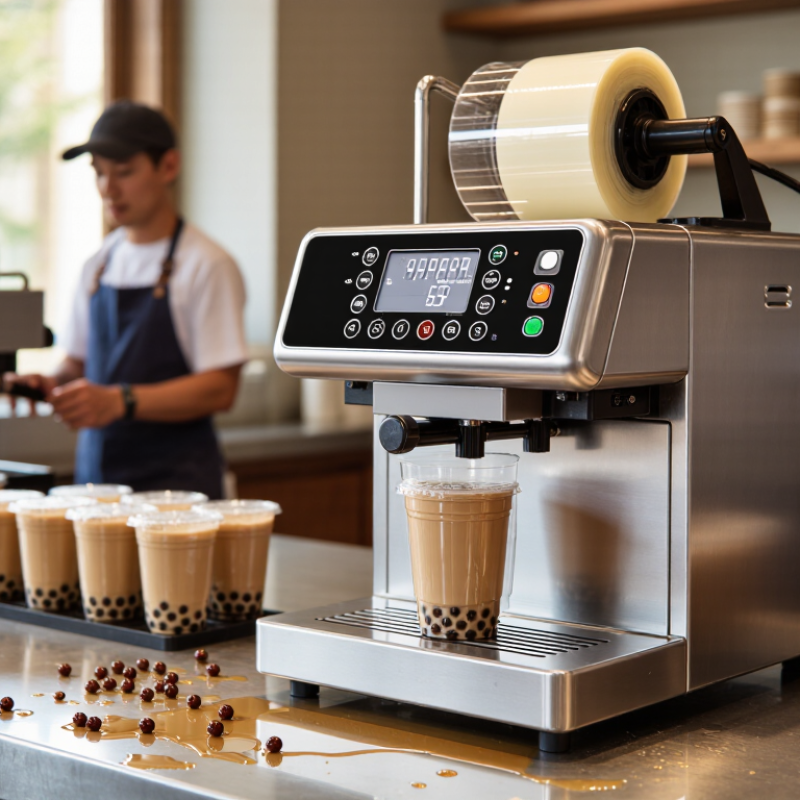
Manual sealers suit small counters with limited orders. They require staff to position each cup and operate the lever. Semi-automatic models add sensors and timed sealing cycles. They improve consistency without requiring a large investment. Automatic machines handle cup feeding, film sealing, and sometimes cutting. They fit busy stores with predictable cup sizes. Not every shop needs maximum speed.
Core functions deserve closer attention. Check compatible cup diameters, film materials, sealing temperature, and adjustable timing. A strong seal should resist leakage around the rim. However, excessive heat can wrinkle film or soften plastic cups. Anti-drip controls help when drinks contain syrup, milk, or crushed ice. Stainless steel contact areas simplify cleaning, while overload protection improves workplace safety.
A practical test should include a cold tea, a thick smoothie, and a full cup. Observe the film edge after ten minutes. Ask whether operators can change rolls without tools. Industry equipment surveys often emphasize uptime, but that metric can hide cleaning delays. A faster machine may create more waste if alignment remains inconsistent. Small flaws matter.
| Machine Type | Core Sealing Method | Typical Output | Compatible Cup Materials | Suitable Cup Sizes | Main Functions | Best-Fit Operation |
|---|---|---|---|---|---|---|
| Manual Sealing Machine | Operator presses a lever to apply heat and pressure to a pre-cut film. | Approximately 200–400 cups per hour, depending on operator speed. | Usually PP cups with compatible heat-sealing film. | Commonly 90–95 mm rim diameter; model-specific. | Basic temperature control, manual film positioning, and heat sealing. | Small beverage shops, kiosks, low-volume service, and limited budgets. |
| Semi-Automatic Sealing Machine | The operator loads the cup and film; the machine performs the sealing cycle automatically. | Approximately 400–800 cups per hour, depending on loading and cycle time. | Primarily PP cups; some models support selected PET cups and films. | Often 90–95 mm rim diameter, with interchangeable molds on some models. | Automatic film feeding, cup detection, timed heating, sealing, and film cutting. | Busy cafés that need consistent seals without fully automated equipment. |
| Automatic Film Sealing Machine | Cup positioning, film feeding, sealing, and cutting are controlled by an automated cycle. | Approximately 700–1,200 cups per hour under suitable operating conditions. | Typically PP cups and matching heat-sealable film. | Commonly 90–95 mm; some machines accept multiple molds. | Automatic cup sensing, film alignment, temperature control, sealing, and trimming. | Medium-to-high-volume stores requiring speed and repeatable sealing quality. |
| Pneumatic Sealing Machine | Compressed air drives the sealing or pressing mechanism. | Approximately 800–1,500 cups per hour, depending on automation level. | Usually PP cups and compatible heat-sealing film. | Often 90–95 mm; exact dimensions depend on the mold. | Fast pressing force, adjustable sealing time, stable pressure, and automated film handling. | High-volume beverage counters with access to a suitable air compressor. |
| Fully Automatic Rotary Sealing Machine | A rotary indexing system moves several cups through filling, sealing, and discharge stations. | Approximately 1,200–2,400 cups per hour, depending on the number of stations and cup handling. | Compatible materials depend on the sealing head, cup rim, and film specification; PP is widely used. | Multiple cup diameters may be supported with dedicated tooling. | Continuous indexing, automatic film feeding, multi-cup handling, sealing, cutting, and discharge. | Central kitchens, large beverage outlets, and production environments with high demand. |
| Induction Sealing Machine | Electromagnetic induction heats a foil-lined closure or compatible seal without direct contact. | Output varies widely; conveyor systems can process hundreds to thousands of containers per hour. | Containers and liners must be specifically designed for induction sealing; not all bubble tea cups are compatible. | Determined by the induction coil and container opening. | Non-contact sealing, tamper evidence, adjustable power, and conveyor integration. | Packaged drinks using compatible containers rather than standard film-sealed bubble tea cups. |